
4 hr
Old Nice Food and Wine Walking Tour
Stroll Vieux Nice's winding lanes tasting local wine, cheese and niçoise specialties with a foodie guide.
Reserve
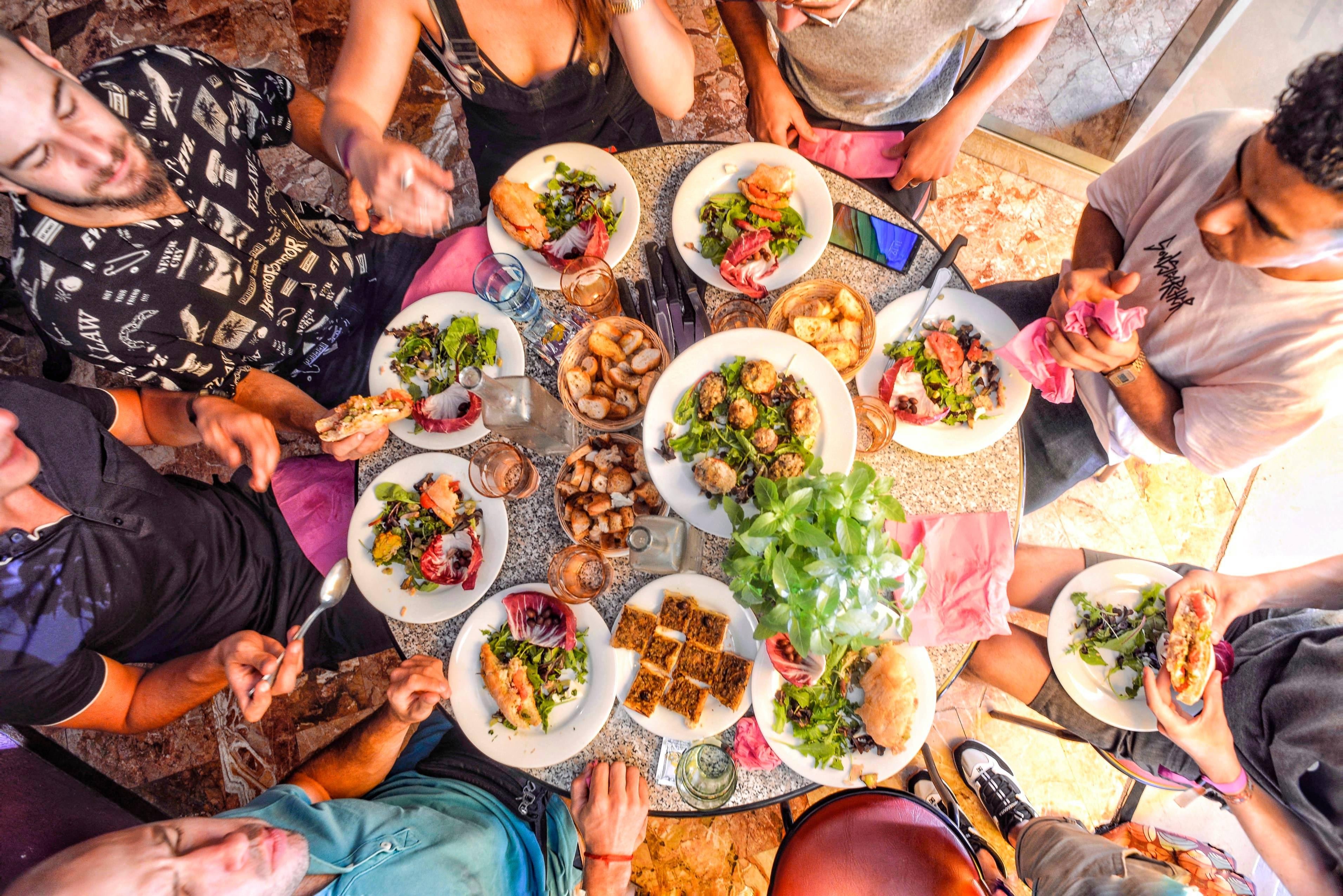

Socca from the copper pan, rosé in the afternoon shade
Hand-picked by our editors — only the best 5 Nice Food Walking Tour tours from 128 reviewed.
Verified partners for every tour, free cancellation where available, and instant confirmation on every booking.
4 hr
Stroll Vieux Nice's winding lanes tasting local wine, cheese and niçoise specialties with a foodie guide.
Reserve
3 hr
Wander Nice's old town lanes sampling socca, pissaladière and more on a 3-hour tasting walk.
Reserve
2 hr 15 min
Wander Nice's baroque lanes, markets and seafront up to Castle Hill with a local guide.
ReservePrices from verified partners. Availability updates in real time at checkout. Free cancellation policies apply where shown.
The landmarks, rooms, and views travelers on this tour remember — all visible on a single visit.
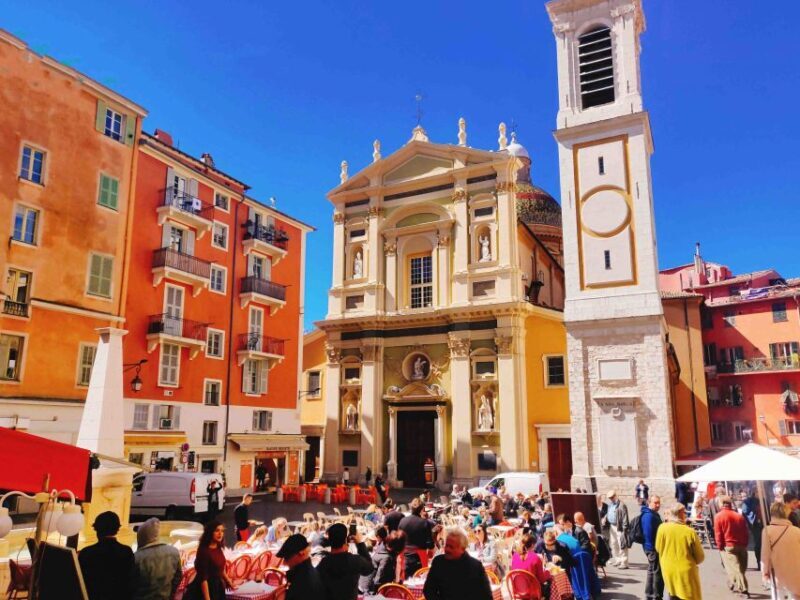
This is the route’s most important food landscape, with flower, fruit, vegetable, and craft stalls in the heart of Old Nice. The tourist office notes that Monday changes the mood entirely, because the flower market gives way to antiques. The square is one of the strongest visual anchors of the nice food walking tour.
The square gives the walk its city-center frame and a strong contrast to the narrow lanes of Vieux Nice. Its geometry and red façades make it a useful navigation point before and after tastings. It is one of the most recognizable landmarks on the nice food walking tour.
These compact streets carry most of the walking rhythm and explain why a small-group format matters. Their scale creates frequent pauses for tastings, stories, and shopfront details rather than long uninterrupted stretches. The old quarter is the historic core of the nice food walking tour.
The steps by Cours Saleya offer a useful elevated viewpoint back over the square and its activity. They are a good place to understand how the market, the façades, and the pedestrian pattern fit together. This adds a small architectural layer to the nice food walking tour.
The surrounding façades are a strong example of the district’s urban composition and help explain why the meeting area is so central. Color, symmetry, and pedestrian flow all work together here, making it more than a simple transit point. This is a practical and photogenic stop on the nice food walking tour.
This higher viewpoint is not part of the tasting route itself, but it is one of the best follow-on references after the walk. The elevated panorama puts the Old Town, harbor, and coastline into one frame. It is a useful post-tour extension for visitors who want more context around the nice food walking tour.
They complement each other, but most food-first travelers will prefer the nice food walking tour for tastings and neighborhood flavor, while the cultural walk suits visitors who want a faster, sightseeing-led introduction to Nice’s landmarks.
| Feature | Top pick Nice Food Walking Tour | Old Town and Castle Hill Guided Cultural Walk |
|---|---|---|
Primary focus |
Food and Old Town tastings | Old Town and Castle Hill sights |
Food quantity |
Up to 25 tastings | Few or no tastings |
Historic commentary depth |
Moderate, food-led context | Deeper cultural commentary |
Typical duration |
3.5 hours | About 2.3 hours |
Best for |
Hungry first-time visitors | Short sightseeing sampler |
Main tradeoff |
Longer, pricier, more eating | Less food, more walking |
| See tickets → |
Verdict: Choose the nice food walking tour if you want the richer culinary experience; choose the cultural walk if your priority is a shorter, lighter visit focused on Nice’s Old Town landmarks.
Choose your ticket, select your date, and reserve in under two minutes. Secure checkout handled by our verified partner.
Instant confirmation by email, with a mobile voucher you can save offline. No printing, no queuing at a collection desk.
Arrive at the entrance, show your voucher on your phone, and walk in. Most tickets include priority or skip-the-line access.
Best time to go, insider tips, nearby landmarks, and the cancellation fine print — flip through to skim what matters to you.
How crowds, weather, and events shift across the year.
March to May brings comfortable walking weather and lively market stalls in the Old Town. Cours Saleya is especially good for produce, flowers, and terrace time before summer heat builds.
June to August is the busiest season, with strong sunshine and a fuller market scene. Start early in the morning to make the walking portion easier and to avoid the hottest streets in Vieux Nice.
September and October are a strong balance of warm weather and lighter crowds. The pace suits a food tour well, especially if you want more room around the market lanes.
November to February is cooler, but Nice stays active and the Old Town remains walkable. Expect a calmer atmosphere, with fewer people at major squares and more relaxed tasting stops.
Small details that turn a good visit into a great one.
The official arrival window is 10:45–11:00, and the small-group tour starts on time. Showing up in that window reduces stress before the first tasting stop.
The site describes up to 25 tastings, so skip a large breakfast. A light start helps you enjoy the cheeses, local specialties, and drinks without feeling rushed.
Old Nice lanes are narrow and busy, especially around market hours. A compact bag is easier to manage while moving between artisans and tasting counters.
Cours Saleya changes mood across the week, and Monday is when the flower market gives way to antiques. If your date is flexible, choose a day that matches the type of atmosphere you want.
This is a moving food experience with history and street-level stops, not a restaurant reservation. Comfortable shoes matter more than dressy outfits.
The best light is usually around the market and the square before midday heat rises. If you want cleaner shots of façades and stalls, use the first half of the tour.
Nice can feel hot and reflective in August, especially on stone streets near the square. A small water bottle helps between tasting stops.
Non-bookable sights within a short walk — free to visit, easy to pair.
The Old Town market square is one of Nice’s liveliest gathering places and the setting for flowers, fruit, vegetables, and local crafts. It also switches to an antiques market on Mondays.
Nice’s iconic square sits on the edge of the Old Town and gives the route a clear city-center anchor. It is a strong photo stop for architecture and people-watching.
A short climb from Old Nice, this park offers wide views over the Baie des Anges, the harbor, and the roofs below. The tourist office notes family play areas, restrooms, and picnic access.
This 1885 waterfall feature on Castle Hill adds a scenic pause to a food-focused day. It is less about history than atmosphere, but it gives the route a memorable visual finale.
The old bridge area helps frame the historic street pattern of Vieux Nice and the route toward the river edge. It works well if you want a deeper sense of the neighborhood’s layered layout.
Flexible, no hidden fees.
If the service is cancelled, the operator will propose an equivalent service or a reimbursement.
Hand-picked options within walking distance — pick a district for vibe, or a specific hotel for convenience.
Classic seafront luxury with quick access to the Old Town and the promenade. Good for guests who want a high-comfort base after a long tasting route.
Compact base in the historic center, useful for early tour starts and late market walks. The location keeps you close to the meeting zone and dinner options.
Central stay near Place Masséna, which makes same-day logistics simple. This is a practical choice if you want to walk straight to the tour area.
If specific hotel inventory is uncertain, this district is the most practical lodging zone for the tour. Staying here minimizes transit time and keeps restaurants, cafés, and the market close.
Nice became French in 1860. Its kitchen never entirely followed. Chickpeas, olive oil, salted anchovy and Swiss chard still tie the Old Town's cooking to Liguria, whose border sits roughly thirty kilometres east. A Nice Food Walking Tour reads that divided inheritance through dishes rather than dates. Socca — chickpea flour, water, olive oil, salt — bakes in copper pans close to a metre across, in wood ovens driven past 400°C, then is scraped up with a blade and eaten standing. The quarter is compact: a grid of tall ochre houses wedged between the Colline du Château and the sea, threaded by lanes barely three metres wide. Flower sellers have traded on the Cours Saleya since the nineteenth century, and the Marché aux Fleurs still opens six mornings a week, ceding the ground to antiques dealers on the seventh. Baroque facades mark the Savoyard centuries, when the city answered to Turin rather than Paris: the Cathédrale Sainte-Réparate, consecrated in 1699, and the Chapelle de la Miséricorde a short walk from it. The best Nice Food Walking Tour tours move between those landmarks and the counters that sit beneath them. The larder is narrow and old. Pissaladière layers onions cooked to collapse over pissalat, a paste of fermented anchovy that gives the tart its name. Pan bagnat soaks a round loaf in olive oil and the components of salade niçoise. Tourte de blettes turns chard into a sweet pie with pine nuts, raisins and sugar dusted across the crust. Bellet, among the smallest appellations in France at roughly fifty hectares of terraces above the Var, supplies the wine. Each Nice Food Walking Tour tour follows a different thread through that list, and a municipal label, Cuisine Nissarde, marks the kitchens still working to the old proportions. What survives here is unusual on this coast: a food culture that stayed working-class while the shoreline around it turned expensive. In 2021 UNESCO inscribed Nice as a winter resort town of the Riviera, and the listing takes in these lanes. A visite gourmande de Vieux Nice, or an Old Town food tasting walk under any other name, is therefore an argument about continuity rather than novelty. Nice Food Walking Tour tickets buy an hour or two inside shops that have outlasted a change of country and every fashion the promenade has since produced.
"Nice became French in 1860; its kitchen never entirely agreed."
Comfortable walking shoes are the safest choice, because the route passes through Old Nice streets and market areas. Light, breathable clothing works best in summer, especially around Cours Saleya and Masséna Square.
You can easily combine it with Cours Saleya, Place Masséna, and Parc de la Colline du Château. These landmarks are all close enough to fit into the same Old Town day without adding much transit time.